No one should face a diagnosis alone.
Alongside Health is the companion for the moment of diagnosis. Starting with Iris for sight loss, and growing to include Clara for cancer, Sam for stroke, Aria for breathing conditions, and Theo for diabetes. Voice-first, screen-reader native, calm by design.
For healthcare organisations: Meet REX →
The moment this was built for
It's 11pm. You've just been told your sight is going to change. The letter in your hand uses words you don't recognise.
Your family is asleep. Tomorrow you have to function. Tonight, you need something steady.
That's the moment Alongside Health was built for.
— Judith Reece, founder
Iris - Chat with your companion for sight loss
Built for people with sight loss from any cause, including macular degeneration, glaucoma, diabetic retinopathy, retinopathy of prematurity, nystagmus, hereditary conditions, accidents, and other medical causes. For you and the carers, families, and trusted advisors supporting you. Screen-reader compatible. Works with your voice tools. Calm by default.
Sources: RNIB / Royal College of Ophthalmologists
What Iris does
-
Translates your letters
Helps you understand diagnosis and referral letters in clearer language, while preserving the important information they contain.
-
Prepares you for appointments
Helps you name what matters, and surfaces the questions you didn't think to ask.
-
Walks the NHS pathway with you
Helps you understand what may come next, make sense of letters and prepare for the next step.
-
Sits with you when it's hard
Honest, never frightening. Calm pacing. Real language. Available when you need support, including at 3am.
What Iris isn't
-
Not a doctor.
We never diagnose, treat, or replace clinical advice.
-
Not a chatbot.
Purpose-built for health. Grounded in condition-specific information, pathways and carefully selected sources.
-
Not falsely optimistic.
We name the hard thing, then offer the next step.
Iris is the flagship. Four more companions are also live now.
Each companion is built for a specific condition and audience, for the person with the diagnosis and for the carers, families, and trusted advisors supporting them. They all share the same warmth, evidence-informed approach and clear clinical boundaries.
Free Health Navigator
A free custom GPT available through ChatGPT. A simple starting point for general health navigation, appointment preparation and understanding health information.
Free to use. A ChatGPT account may be required. Your use of Health Navigator through ChatGPT is also subject to OpenAI's applicable terms and privacy arrangements.
Try Health Navigator free →Iris
Chat with Iris, your companion for sight loss from any cause. For you and the carers, families, and trusted advisors supporting you.
Flagship companion — £49.99Clara
Chat with Clara, a cancer navigator for people moving through the UK cancer pathway and their carers, families, and trusted advisors, from two-week wait to treatment decisions.
Live now — £49.99Sam
Chat with Sam, your stroke companion for stroke survivors and their carers, families, and trusted advisors, the first weeks, the rehab pathway, the slow return.
Live now — £49.99Aria
Chat with Aria, your breathing companion for people with COPD and respiratory conditions, and their carers, families, and trusted advisors. Helping you understand information about your respiratory condition, prepare for appointments and recognise when to seek professional or urgent medical advice.
Live now — £49.99Theo
Chat with Theo, your diabetes companion for people newly diagnosed with type 1 or type 2, and their carers, families, and trusted advisors. Practical, daily, no lecturing.
Live now — £49.99Three ways people come to us.
Different starting points. Same commitment — calm, credible, human support when it matters most.
For you & your family
If you or someone you love has just been diagnosed, an Alongside companion is for you. Try the free Health Navigator first, or go straight to a condition-specific companion like Iris, Clara, Sam, Aria, or Theo.
You don't need to be comfortable with technology. Everything is screen-reader compatible and works with your device's voice tools. If you can speak to a phone, you can use it. And if you need support to set it up, we're here.
What you get
- Instant access via email, phone, or screen-reader
- Set up in 30 minutes — assisted setup available
- Unlimited use, always available
- Your conversation is processed to provide your response, but Alongside Health does not retain your conversation history after a Basic session.
For charities: design partners
We're taking two charity design partners in 2026. Sight-loss-focused first, then broadening as our companion family grows. This isn't a services arrangement. It's a partnership that makes the product stronger for your community and for everyone who comes after.
You bring the community insight, the lived experience, and the clinical grounding. We bring the platform, the accessibility discipline, and twenty years of pharmaceutical and healthcare strategy. The companion carries your brand. The outcome data is shared. The product improves for both of us.
Design partnership
- Co-designed with your community and clinical advisors
- Your brand on the front, our platform behind it
- Shared impact data and outcome reporting
- Preferred terms for sight-loss focused charities
For healthcare partners: supporting patients beyond the clinical encounter
Alongside Health works with healthcare organisations to explore how accessible, evidence-informed AI can strengthen patient understanding and navigation.
REX, our post-discharge companion for Emergency Departments, was awarded the IFEM Visionary Industry Technology Award 2026.
REX is designed to help patients understand and revisit discharge information, navigate what happens next and access support when questions arise. It is free at point of use for patients and designed for deployment through healthcare organisations.
REX design partnerships
- Post-discharge information and navigation for ED patients
- Free at point of use for patients
- Multilingual — 11 languages including Arabic and Urdu
- IFEM VITA Award winner 2026
- Evidence-led design partnership approach
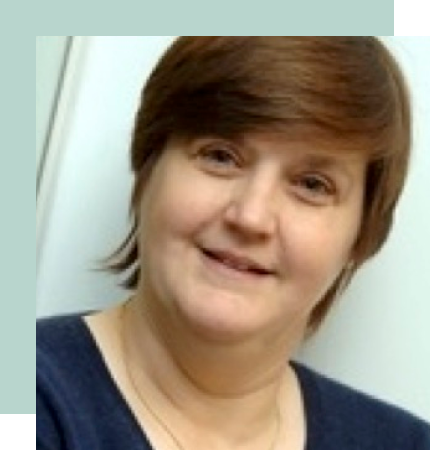
A career spent researching, building and transforming healthcare. Harvard, AstraZeneca, GSK.
And in the middle of all of it, my children were born with visual impairments. Prostate cancer came for our family.
I felt as lost as anyone.
All that expertise, and I still couldn't find the path. Still couldn't quiet the fear. Still couldn't bridge the gap between what the system offered and what a frightened, exhausted person could actually reach.
That's when it became impossible to ignore: Knowledge is not navigation. Expertise does not dissolve fear.
The clinical information exists. The pathways exist. But too many people are still left to navigate the hard parts without the support they need.
So I built Alongside Health, AI companions designed to help bridge that gap. They acknowledge fear before offering information and help turn a diagnosis into clearer next steps.
Calm pacing. Quiet design. Built to be used on the worst days.
Most health companions are built by people designing for themselves. We built ours for the audience that's hardest to get right — people newly diagnosed with sight loss, often elderly, often frightened, often relying on assistive technology. Designing for people with significant accessibility needs creates a discipline that strengthens every companion we build.
Screen-reader compatible, from the start.
Built to work with the assistive technology you already use. Compatible with screen readers and voice input tools.
Works with your voice tools.
Use your device's built-in voice input or third-party voice tools. Type if you prefer. Speak if it's easier. Built for low vision and low energy.
Clear, accessible text.
Built with Atkinson Hyperlegible font, designed by the Braille Institute for low vision readers. High contrast and adjustable text size on this site.
Calm pacing. Follows you.
No notifications. No streaks. No gamification. Presence, not pressure.
Honest boundaries. Always.
When something is outside our scope, we say so — and point you to the right person.
Your data, your terms.
Plain-English privacy. Clear choices about conversation history. We never sell your personal information.
Building for the hardest audience isn't a constraint. It's what lets us serve every audience that follows.
Simple. Honest. No tricks.
Start with our free Health Navigator on ChatGPT. Choose Basic for condition-specific support, or Premium for longer sessions and continuity across conversations.
Free Health Navigator
- General health navigation
- Appointment preparation
- Letter explanation
- A ChatGPT account may be required. Your use is also subject to OpenAI's applicable terms and privacy arrangements.
Basic - Any Companion
- Condition-specific support
- Choose: Iris, Clara, Sam, Aria, or Theo
- Unlimited messages
- Upload documents (up to 20MB)
- Screen-reader compatible, works with your voice tools
- Assisted setup included
- Session-based conversations (privacy-focused)
Premium with Extended Support
- ✨ 8x longer conversation sessions
- Full conversation memory within each session
- No rate limits (unlimited messages)
- Conversation memory across sessions (last 50 messages)
- Rolling 100-message history stored securely in encrypted database
- All features from Basic tier
- Choose: Iris, Clara, Sam, Aria, or Theo
How it works
Basic: Each conversation is fresh and private. Your companion has full context during your session, but nothing is stored afterward. Premium: Your companion remembers your last 50 messages across sessions, stored securely in an encrypted database. You can delete your conversation history at any time.
Basic
Shorter conversation sessions. Great for focused questions about a specific letter or appointment. Alongside Health does not retain your conversation history after your Basic session.
Premium
8x longer conversation sessions. Your companion has full context throughout your session—diagnosis, medications, appointments, worries. No message limits. Your companion remembers your last 50 messages so you can continue conversations across sessions. Your last 100 messages are stored securely in an encrypted database.
Premium works best for people managing ongoing conditions who need extended conversations without interruption, not just one-off questions.
Questions people actually ask.
How is this different from ChatGPT or other AI chatbots?
Each Alongside Health companion is purpose-built for a specific condition, with a carefully developed knowledge base, clear clinical boundaries and evidence-informed responses. Health Navigator is a separate free custom GPT available through ChatGPT, useful for general health questions. The companions do not search the internet and have a tone designed for people at vulnerable moments. If it helps: think less "automated helpdesk", more "knowledgeable friend who happens to have worked in pharma for twenty years".
Can it diagnose me or change my treatment?
No. We don't diagnose, we don't treat, and we don't replace your clinician. What we do is help you understand what's already been said, prepare well for your next appointment, and walk the pathway step-by-step so you know what's coming. If something needs a clinician, we'll say so.
How is my information handled?
Health Navigator is a custom GPT available through ChatGPT. Your use of it is therefore also subject to OpenAI's applicable terms and privacy arrangements.
Alongside Health Basic is designed so that Alongside Health does not retain your conversation history after your session.
Alongside Health Premium securely retains limited conversation history so that you can continue where you left off. You can delete your conversation history at any time.
We never sell your personal information. Our Privacy Policy explains what information is processed, why it is needed, how long it is retained and the organisations involved in providing the service.
Will it work with my screen reader or voice input?
Yes. The companions are designed to work with the assistive technology you already use, including screen readers and voice input tools. If you encounter any barriers, please tell us so we can fix them.
Who built this?
Alongside Health is built by Reece Advisory Ltd, founded by Judith Reece — twenty years in pharmaceutical R&D strategy and digital health transformation, now applied directly to patient support. We're a small, focused UK team, and we'd rather build fewer things well than many things adequately.
Why are the companions named Clara, Sam, Aria, Iris, and Theo?
Clara comes from a Latin word meaning clear and bright. It felt right for someone whose job is to help make a very unclear and frightening time feel a little more navigable.
Sam is a name that means to listen, or to be heard. That felt like exactly the right starting point for this kind of conversation.
Aria means air in Italian, breath, essentially. It felt like a fitting name for a companion whose whole purpose is to support people for whom breathing is at the centre of everything.
Iris is the part of the eye that controls how much light comes in. It felt like a quiet way to honour sight, without making the name feel heavy.
Theo comes from a Greek word meaning gift. People living with diabetes didn't ask for it and don't deserve the judgment that often comes with it. The name felt like a small way of saying you are valued here.
Do you work with healthcare organisations?
Yes. We are currently exploring a small number of design and research partnerships for REX, our post-discharge companion for Emergency Departments. We are taking a deliberately evidence-led approach, working with clinical partners to evaluate patient benefit, safety, implementation and impact before broader deployment.
The moments that change everything deserve a companion who understands them.
Whether you're newly diagnosed, caring for someone who is, or building services for a patient community — we'd like to hear from you.